How to Verify Third Party Tested SARMs: Complete Guide 2026
Learn how to verify third party tested SARMs with our expert guide. Protect your health by identifying legitimate COAs and avoiding counterfeit products.
Min Read
Words
Sections
Updated

Introduction
Selective Androgen Receptor Modulators (SARMs) flood the market with varying quality levels, making verification of third-party testing essential before you put anything in your body.
Selective Androgen Receptor Modulators (SARMs) flood the market with varying quality levels, making verification of third-party testing essential before you put anything in your body. Counterfeit products, underdosed compounds, and contaminated batches create serious health risks that proper verification eliminates. Learning how to verify third party tested SARMs protects your health and ensures you get what you pay for.
The SARMs industry operates with minimal FDA oversight as of 2026, placing the burden of quality assurance on manufacturers and consumers. Third-party testing provides independent confirmation that products contain the stated ingredients at advertised concentrations without harmful contaminants. This verification process separates legitimate suppliers from vendors selling diluted or fake compounds.
What Third-Party Testing Actually Means
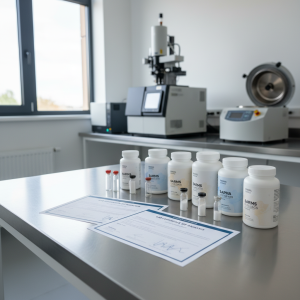
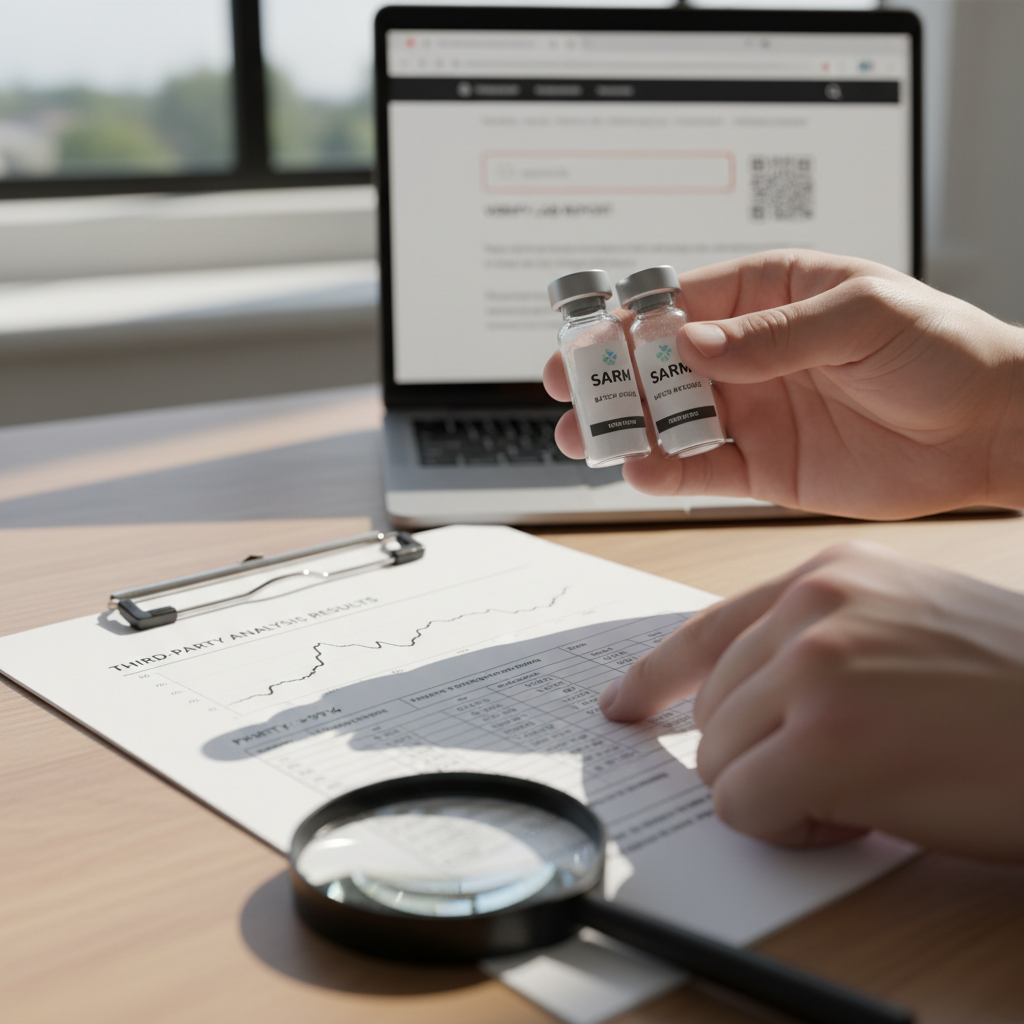
Third-party testing involves sending product samples to independent laboratories that have no financial stake in the results. These labs use analytical methods like High-Performance Liquid Chromatography (HPLC) and Mass Spectrometry (MS) to identify and quantify compounds in each batch. The testing facility generates a Certificate of Analysis (COA) documenting exactly what they found.
Legitimate testing differs from in-house quality control because external labs maintain accreditation standards and have no incentive to falsify results. Labs accredited by ISO/IEC 17025 follow strict protocols for equipment calibration, sample handling, and result reporting. This accreditation confirms the lab meets international standards for testing competence.
Essential Elements of Valid Certificates of Analysis
A genuine COA contains specific information that distinguishes it from fabricated documents. The certificate must include the testing laboratory’s name, address, and contact information. Accreditation numbers from bodies like ISO or A2LA should appear clearly on the document.
Each COA displays the batch or lot number corresponding to the product tested. This batch number must match the number printed on your product label. Testing dates matter because compounds degrade over time—COAs older than six months raise questions about current product quality.
The analytical results section shows the target compound’s measured concentration compared to the label claim. Quality SARMs typically test within 98-102% of the stated dose. The COA should also list tested contaminants including heavy metals (lead, arsenic, mercury, cadmium), residual solvents, and microbiological contaminants.
Method descriptions tell you which analytical techniques the lab used. HPLC-MS/MS represents the gold standard for SARMs verification, providing both identification and quantification. UV-Vis spectroscopy alone lacks the specificity needed to confirm SARMs identity definitively.
How to Verify COA Authenticity
Counterfeit COAs circulate widely in the SARMs market. Vendors create fake certificates using templates or doctor legitimate documents from other batches. Learning how to verify third party tested SARMs requires checking COA authenticity through multiple verification steps. Contact the testing laboratory directly using contact information you find independently—not the phone number printed on the
Counterfeit COAs circulate widely in the
Vendors create fake certificates using templates or doctor legitimate documents from other batches.
Contact the testing laboratory directly using
Call or email the lab and provide the report number, requesting confirmation that they issued the certificate for that specific batch.
Check the lab's accreditation status through
The ANAB (ANSI National Accreditation Board) and A2LA (American Association for Laboratory Accreditation) maintain searchable directories of accredited facilities.
Examine the document for professional formatting
Real COAs use consistent fonts, proper scientific notation, and correct units of measurement.
Red Flags That Indicate Fake Testing
Several warning signs reveal vendors who claim third-party testing without actually conducting it. Products lacking visible batch numbers prevent you from matching the COA to your specific purchase. If every product shows the same batch number regardless of when you order, the vendor likely uses one old COA for all sales.
Generic COAs listing only “SARMs” without specifying the exact compound (Ostarine, RAD-140, LGD-4033, etc.) indicate fabricated testing. Real analytical testing identifies precise molecular structures, not product categories.
Suspiciously perfect results showing exactly 100.0% purity or precisely the labeled dose suggest manufactured data rather than actual measurements. Real analytical testing produces results like 99.3% or 101.7% due to normal measurement variation.
Vendors who refuse to provide COAs before purchase or make you search their website extensively to find testing documentation often have something to hide. Reputable suppliers display current COAs prominently on product pages.
The Importance of Batch-Specific Testing
Manufacturing processes introduce variation between production runs. A vendor might produce a high-quality batch in January and a contaminated batch in March using different raw materials. Batch-specific testing catches these variations before products reach consumers.
Each batch number represents a distinct production run from specific raw material lots. When you verify third-party tested SARMs, confirm the batch number on your product label matches the batch number on the COA exactly. Mismatched numbers mean the testing doesn’t apply to your product.
Quarterly testing schedules represent the minimum acceptable frequency for SARMs vendors. Monthly testing provides better assurance, especially for high-volume suppliers producing multiple batches per month. The testing date on the COA should fall within 90 days of your purchase date.
Testing Standards for Different SARMs Compounds
Different SARMs require specific analytical approaches based on their chemical properties. Ostarine (MK-2866) testing must differentiate it from similar compounds like Andarine since they share structural similarities. RAD-140 testing should confirm the absence of prohormones that some vendors substitute to reduce costs.
Liquid SARMs formulations require additional testing for carrier solution purity and stability. The COA should verify the concentration remains consistent throughout the bottle, not just in a single sample. Ethanol, PEG-400, and other carriers must meet pharmaceutical-grade purity standards.
Capsulated SARMs need testing for both the active ingredient and excipients. Fillers and binding agents should be identified and confirmed as safe for human consumption. Weight variation testing ensures each capsule contains uniform dosing.
Why Steroidscanada.is Sets the Industry Standard
Finding verified, legitimately tested SARMs requires partnering with suppliers who prioritize transparency and quality. Steroidscanada.is maintains batch-specific testing protocols for every product, with COAs readily accessible on each product page at https://steroidscanada.is.
The verification process becomes straightforward when suppliers provide complete documentation including lab contact information, accreditation certificates, and detailed analytical results. This transparency allows you to independently confirm testing authenticity without guesswork.
Practical Steps for Your Next Purchase
Before buying any SARMs product, download the COA from the product page and verify the batch number matches current inventory. Contact the testing laboratory using independently verified contact information to confirm the certificate’s authenticity. Check that testing occurred within the past 90 days and includes both purity and contamination screening.
Compare the analytical methods used against industry standards—HPLC-MS/MS provides superior verification compared to less specific techniques. Review the lab’s accreditation status through official databases to confirm they maintain current certification for chemical analysis.
Request the vendor provide historical COAs from previous batches to establish a pattern of consistent quality. Vendors with nothing to hide will readily share this information. Calculate the cost per milligram based on verified concentration rather than label claims, since underdosed products offer poor value regardless of price.
Key Takeaways
Verification of third-party tested SARMs protects your health and investment by confirming product identity, purity, and safety. Authentic COAs contain specific elements including accredited lab information, batch numbers, detailed analytical results, and testing methods. Contact testing laboratories directly to confirm certificate authenticity rather than trusting documents at face value.
Batch-specific testing matters because quality varies between production runs. Match the batch number on your product to the batch number on the COA exactly. Red flags like missing batch numbers, generic testing claims, and suspiciously perfect results indicate vendors who fake quality assurance.
The verification process requires active effort but becomes routine once you understand what to check. Reputable suppliers make verification easy by providing complete documentation and transparent access to testing information. Visit https://steroidscanada.is to find SARMs backed by legitimate third-party testing with readily verifiable COAs for every batch.
Your Complete how to verify third party tested sarms Resource for 2026
Everything you need to know, backed by research and expert guidance.