
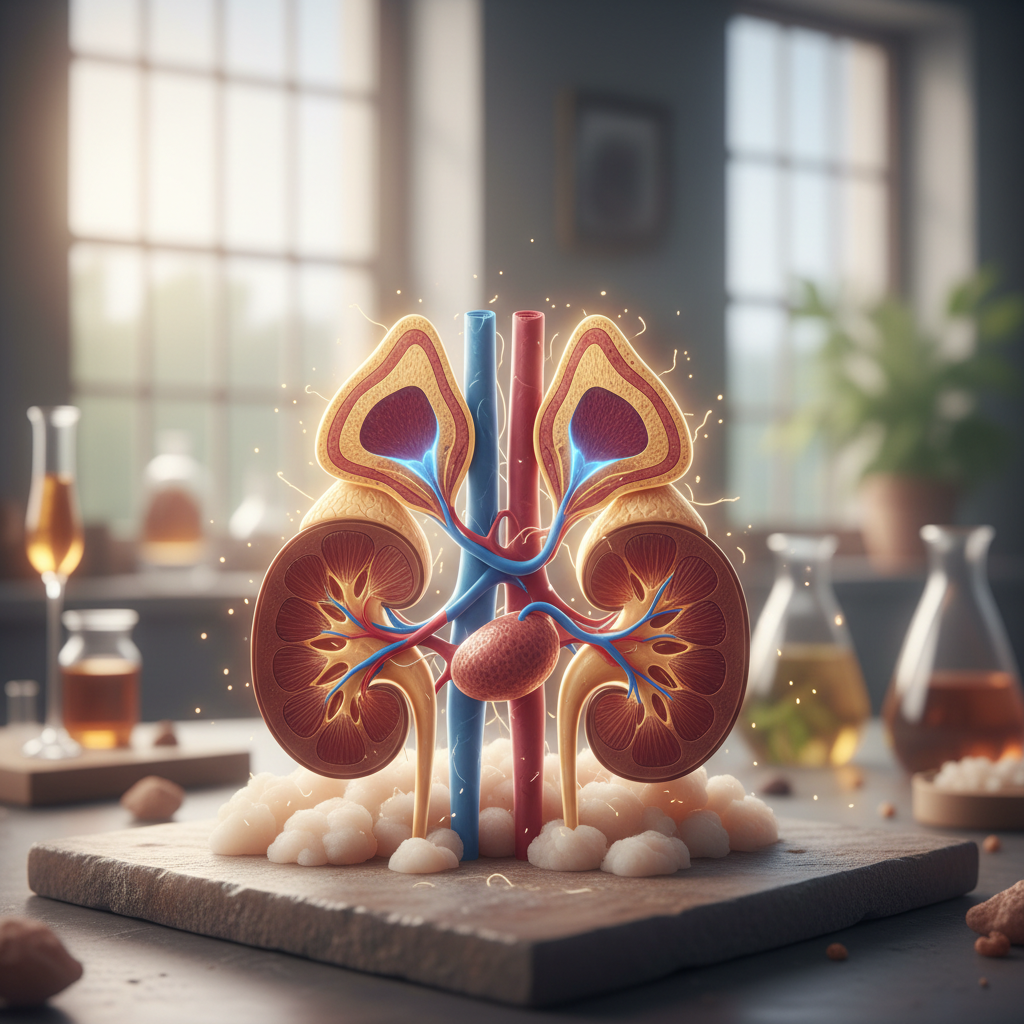
What the Adrenal Glands Actually Do
The adrenal glands are small, triangular structures sitting just above each kidney, but their physiological reach is far greater than their size suggests. These glands produce hormones that regulate blood pressure, control inflammation, manage the body’s response to physical and emotional stress, and influence metabolism. When adrenal function is running smoothly, most people never think about it. When it breaks down, the consequences show up across multiple body systems at once, making the source of the problem difficult to pinpoint without proper testing.
Cortisol is the primary hormone produced by the adrenal cortex, and it serves as the body’s main stress management tool. It mobilizes glucose for energy during demanding situations, suppresses inflammation, and helps regulate immune activity. Aldosterone, another adrenal hormone, controls sodium and potassium balance, which directly affects blood pressure and fluid retention. The adrenal medulla also produces adrenaline, which drives the immediate fight-or-flight response. Each of these functions depends on a healthy, responsive adrenal system operating within normal parameters.
When adrenal output becomes disrupted, whether through chronic stress, autoimmune damage, or prolonged medication use, the downstream effects can include persistent fatigue, poor stress tolerance, blood sugar instability, and weakened immune defenses. Adrenal system support has become a topic of significant interest in both conventional medicine and integrative health circles, largely because more people are recognizing how central adrenal function is to overall wellbeing. Two distinct categories of substances, adaptogens and steroids, have attracted the most attention in this area, though they work through very different mechanisms and suit very different situations.
Understanding the distinction between these two approaches requires looking at both the science and the clinical context in which each is used. Neither adaptogens nor steroids are universally appropriate, and treating them as interchangeable would be a mistake. The goal of this article is to clarify what each does, when each is appropriate, and how they fit into a broader strategy for maintaining adrenal health over time.
Adaptogens and How They Support the Adrenal System
The term adaptogen was coined in the mid-20th century by Soviet pharmacologist Nikolai Lazarev, who was investigating substances that could help people perform under extreme physical and psychological conditions. The core idea was straightforward: certain plant compounds appear to help the body maintain stability under stress without causing significant harm or disrupting normal physiological function. This concept was later refined by researcher Israel Brekhman, who established criteria that a true adaptogen must meet, including safety, broad-spectrum stress resistance, and the ability to normalize physiological function regardless of the direction of imbalance.
Adaptogens are thought to work primarily through the hypothalamic-pituitary-adrenal axis, which is the communication pathway connecting the brain to the adrenal glands. This axis governs how the body detects and responds to stressors of all kinds, whether they are physical, emotional, or environmental. Adaptogens appear to modulate signaling within this axis in ways that reduce excessive cortisol output during acute stress while also preventing the kind of sustained cortisol elevation that contributes to fatigue, immune suppression, and metabolic disruption. They do not override the system but rather help it calibrate more effectively.
Among the most studied adaptogens for adrenal system support are ashwagandha, rhodiola rosea, eleuthero, and holy basil. Ashwagandha has performed well in multiple randomized controlled trials, with participants showing measurable reductions in cortisol levels alongside improvements in self-reported stress, anxiety, and sleep quality. Rhodiola rosea has been studied in occupational settings, where it showed reductions in burnout-related fatigue among physicians and other high-stress professionals. These findings are not conclusive, but they represent a meaningful body of evidence that adaptogens can produce real physiological changes rather than purely placebo effects.
One important characteristic of adaptogen use is that benefits tend to accumulate gradually rather than appearing after a single dose. Most clinical trials showing positive results ran for at least four to eight weeks of consistent daily use. This time frame matters for anyone evaluating whether adaptogens are working, since expecting immediate results would lead to premature abandonment of an approach that requires sustained use to show its effects. Adaptogens are best understood as long-term supportive tools rather than acute interventions.
Steroids and Their Relationship to Adrenal Function
Steroids, in the physiological and medical sense, are compounds built on a shared molecular framework. The adrenal cortex naturally synthesizes several steroid hormones, most notably cortisol and aldosterone, as well as small quantities of sex hormones. Synthetic steroids were developed to replicate or amplify the effects of these naturally occurring compounds in situations where the body cannot produce adequate amounts on its own or where disease processes require direct hormonal intervention to prevent serious harm.
Corticosteroids such as hydrocortisone, prednisone, and methylprednisolone are the most commonly prescribed synthetic steroids in clinical medicine. They are used to manage conditions including severe asthma, rheumatoid arthritis, lupus, inflammatory bowel disease, and various skin disorders. In these contexts, they provide rapid and often dramatic relief by suppressing the inflammatory cascade at multiple points. For many patients, corticosteroids are not merely helpful but medically necessary, and their benefits in acute situations are well established.
The mechanism by which synthetic steroids work differs fundamentally from how adaptogens function. Rather than supporting the body’s own regulatory processes, synthetic steroids substitute for or amplify hormonal activity directly. Prednisone, for example, binds to glucocorticoid receptors throughout the body and produces anti-inflammatory effects that the body’s own cortisol may not be generating in sufficient quantity. This produces results quickly, which is why steroids remain essential in emergency and acute care settings where time matters.
The trade-offs associated with steroid use, particularly over longer periods, are significant and must be considered carefully. Prolonged corticosteroid therapy can suppress the HPA axis, causing the adrenal glands to reduce their natural cortisol production. This creates a state in which the body becomes dependent on the external supply of the hormone. Stopping steroid treatment abruptly in this situation can trigger adrenal insufficiency, which is a potentially life-threatening condition. Additional risks of long-term steroid use include bone density loss, elevated blood sugar, increased infection susceptibility, fluid retention, and mood changes. These risks do not make steroids inappropriate in the right context, but they do reinforce why medical oversight is non-negotiable.
Comparing the Two Approaches to Adrenal System Support
When placed side by side, adaptogens and steroids represent fundamentally different philosophies of adrenal system support. Adaptogens work alongside the body’s existing regulatory systems, helping them function more efficiently without overriding natural processes. Steroids, particularly synthetic ones, take a direct substitution or amplification approach, stepping in when the body cannot manage hormonal demands on its own or when disease processes require immediate intervention. These are not competing philosophies so much as tools suited to different problems.
For individuals dealing with chronic low-grade stress, mild HPA axis dysregulation, or early fatigue without a diagnosed adrenal disorder, adaptogens offer a relatively low-risk option for support. The evidence for ashwagandha in reducing cortisol and improving stress tolerance is among the strongest in this category, though it is important to note that this evidence applies to people with functioning adrenal systems under strain rather than those with clinical adrenal disease. Applying adaptogens to a case of genuine adrenal insufficiency would be insufficient and potentially dangerous, since the underlying hormonal deficit would remain unaddressed.
Steroids become necessary when the adrenal system has genuinely failed or when inflammation poses an immediate threat to health. Addison’s disease, in which the adrenal glands cannot produce adequate cortisol or aldosterone due to autoimmune destruction or other causes, requires lifelong hormone replacement therapy. In this setting, hydrocortisone is not optional but essential for survival. Similarly, acute inflammatory crises may require short-term steroid use regardless of the long-term risks, because the alternative of uncontrolled inflammation carries greater immediate danger.
The practical takeaway is that adrenal system support looks different depending on the clinical picture. Someone with elevated but non-pathological cortisol due to work stress is a candidate for adaptogen use, lifestyle changes, and stress reduction strategies. Someone with a confirmed diagnosis of adrenal insufficiency needs medically supervised hormone replacement. Someone on long-term steroid therapy for an autoimmune condition may benefit from both careful steroid management and supportive lifestyle strategies that help mitigate side effects. Getting the right tool for the right situation requires proper diagnosis, not guesswork.

Practical Guidance for Safe and Informed Use
Anyone considering adaptogen supplementation should begin with a single herb rather than a combination product. Starting with one herb at a time makes it possible to assess individual response more clearly and identify any adverse reactions before adding complexity. For ashwagandha, starting doses typically range from 300 to 600 mg of a standardized extract per day. Rhodiola rosea doses often begin around 200 to 400 mg daily. Both are generally well tolerated, though some people report mild digestive discomfort, particularly when taking ashwagandha on an empty stomach.
Cycling adaptogen use is a practice favored by many clinicians and informed users, typically involving a break of one to two weeks after every six to eight weeks of continuous use. The rationale is that this may prevent the body from becoming overly accustomed to the herb’s effects, though the clinical evidence for this specific practice is limited. What is more clearly supported is the importance of monitoring how the body responds over time and adjusting use accordingly. Consistent self-monitoring and periodic check-ins with a healthcare provider are reasonable precautions for anyone using adaptogens regularly.
Steroid use of any kind must be managed by a qualified medical professional. Self-prescribing corticosteroids, including those available without prescription in certain countries, carries serious risks that include adrenal suppression, infection, and metabolic complications. Dosing must be carefully calibrated to the individual’s condition and body weight, and any reduction in dose must follow a gradual tapering schedule that gives the adrenal glands time to resume normal cortisol production. Patients on long-term steroid therapy should receive regular monitoring for bone density, blood sugar, blood pressure, and cardiovascular risk markers.
For people using steroids under medical supervision, complementary lifestyle strategies can reduce some of the risks associated with prolonged use. Weight-bearing physical activity supports bone density. A diet lower in refined carbohydrates and higher in whole foods can help manage blood sugar fluctuations. Adequate calcium and vitamin D intake is important for skeletal health throughout steroid therapy. These measures do not eliminate steroid-related risks, but they can meaningfully reduce their severity and help maintain overall health during treatment.
The Broader Context of Adrenal Health
Adrenal function does not operate in isolation from the rest of the body. The adrenal glands receive signals from the brain through the HPA axis and communicate with the thyroid, reproductive system, and immune system through hormonal feedback loops. Sleep quality, nutritional status, physical activity levels, and chronic stress load all directly influence how well the adrenal system performs. Focusing on supplements or medications while ignoring these foundational factors will produce limited results, regardless of which substances are used.
The growing public conversation around adrenal fatigue has created both useful awareness and real problems. On the positive side, it has encouraged more people to take their stress levels seriously and explore supportive strategies. On the problematic side, it has generated a supplement industry that frequently overstates the evidence and encourages self-diagnosis of conditions that may require genuine medical attention. Adrenal insufficiency is a serious medical condition that requires diagnosis through proper hormonal testing and clinical evaluation, not symptom checklists found on wellness websites.
Research into adaptogens and adrenal physiology continues to develop, with more rigorously designed clinical trials now underway than existed a decade ago. As the evidence base grows, clinical recommendations will likely become more specific and better matched to particular populations and health contexts. For now, the most responsible position is to treat adaptogens as supportive tools with a promising but still-developing evidence base, and to treat steroids as powerful medications that require careful, professional oversight in every case.
Supporting adrenal system health over the long term is best understood as an ongoing process rather than a problem to be solved with a single intervention. Whether the tools involved are adaptogenic herbs, prescribed steroids, or foundational lifestyle practices, the underlying objective remains consistent: helping the adrenal system carry out its many essential functions without being pushed beyond its limits. Working with knowledgeable healthcare providers, maintaining realistic expectations, and staying current with emerging research will serve anyone navigating this area of health far better than any supplement or medication can accomplish on its own.