
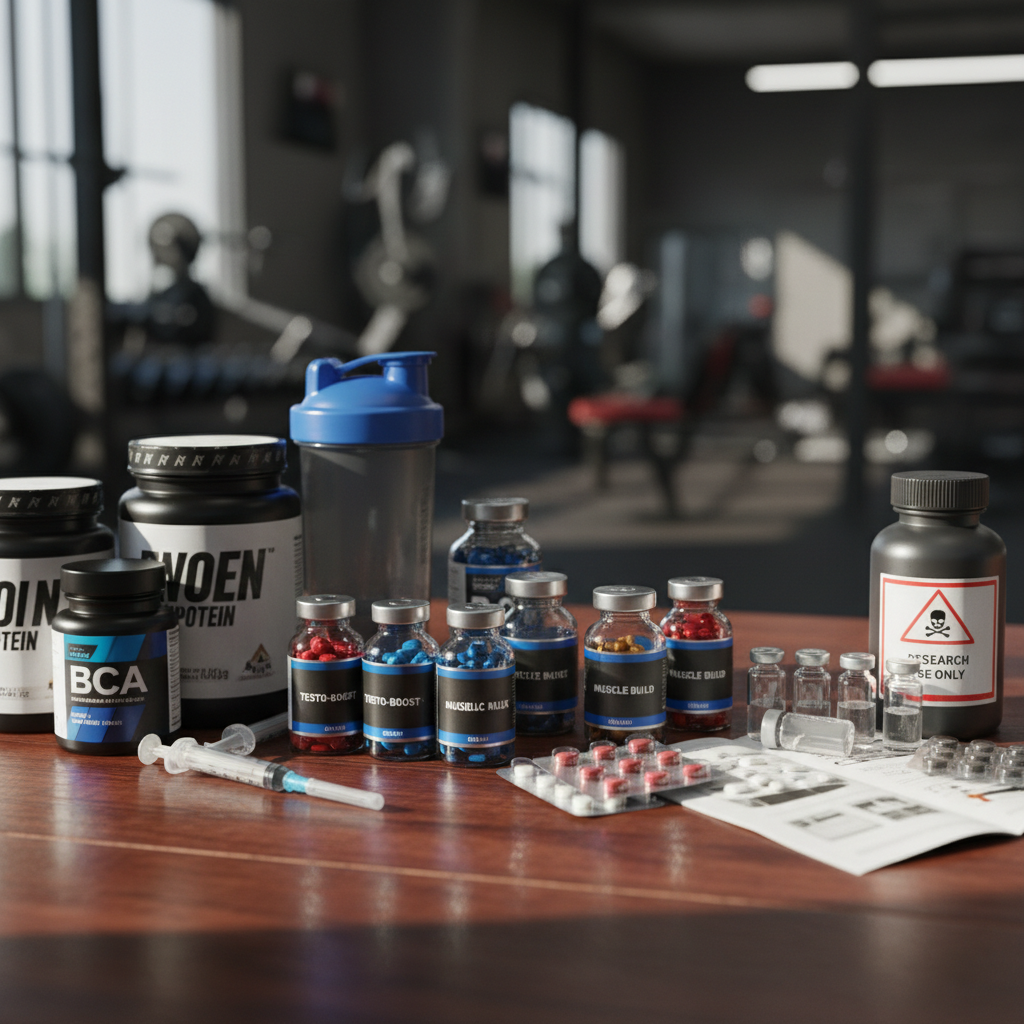
What SARMs and Steroids Actually Are
Anabolic steroids are synthetic derivatives of testosterone, the primary male sex hormone. When introduced into the body, they bind to androgen receptors found across multiple tissue types, triggering accelerated protein synthesis, faster muscle repair, and substantial increases in physical strength. Medical professionals have used them for decades to treat conditions such as muscle-wasting diseases, delayed puberty, and hormonal deficiencies. However, their use outside of clinical settings for athletic performance and physique enhancement has been widespread, often without any medical supervision.
SARMs represent a newer category of compounds developed with a more targeted approach in mind. Rather than activating androgen receptors throughout the entire body as steroids do, SARMs are engineered to bind selectively to receptors in muscle and bone tissue. The original motivation behind their development was to capture the muscle-building effects of steroids while reducing the broader hormonal disruption those compounds are known to cause. Pharmaceutical researchers initially explored them as potential treatments for osteoporosis and muscle-wasting conditions.
In terms of how each substance is administered, anabolic steroids are available in both injectable and oral forms. Injectable versions are generally considered less burdensome on the liver, while oral steroids pass through the digestive system and place greater strain on hepatic function. SARMs are typically sold in oral capsule or liquid form, making them more accessible to general consumers, though this accessibility comes with its own set of concerns regarding product quality and dosing accuracy.
Neither SARMs nor anabolic steroids are approved by the FDA for performance enhancement in healthy adults. Both carry legal restrictions in most countries, and neither should be used without a thorough understanding of the health implications involved. The fact that SARMs are frequently marketed as a safer alternative to steroids does not mean they are without risk, particularly given how limited the long-term human research on these compounds remains.
The Benefits Both Substances Offer
The most commonly cited reason people turn to anabolic steroids is the significant increase in muscle mass they can produce over relatively short periods. By elevating the rate of protein synthesis and shortening recovery time between training sessions, steroids allow users to train more frequently and with greater intensity. Well-studied compounds such as testosterone enanthate, nandrolone decanoate, and trenbolone acetate have demonstrated consistent results in building lean body mass in both clinical and real-world contexts.
SARMs such as Ligandrol (LGD-4033) and Testolone (RAD-140) have shown comparable muscle-building potential in early research, though the magnitude of results tends to be more moderate than what traditional steroids produce. For individuals seeking noticeable physical improvements without the full hormonal disruption associated with steroid use, certain SARMs have become attractive options within bodybuilding and fitness communities. Ostarine (MK-2866) in particular has been studied for its ability to preserve muscle tissue during caloric restriction, making it relevant for body recomposition goals.
Fat loss is another area where both substances show measurable effects. Steroids can shift the body’s metabolic balance toward using stored fat as fuel while protecting lean muscle during cutting phases. This dual effect makes them appealing not just for bulking cycles but for improving overall body composition. Certain SARMs share this quality, with some compounds showing the ability to reduce fat mass while simultaneously supporting muscle retention.
Bone density improvements have been documented with both substance categories. Steroids have a long history in medical research related to bone strengthening, and several SARMs were specifically developed to address conditions like osteoporosis. For older athletes or those recovering from skeletal injuries, this aspect of their function carries practical relevance beyond simple performance enhancement.
Recovery speed and training endurance are additional benefits that users and researchers have noted with both SARMs and steroids. Both reduce the rate at which muscle protein breaks down during intense physical activity, allowing athletes to sustain higher training volumes over time. This reduction in catabolism translates to more consistent performance output and a faster return to full capacity after demanding training sessions.

The Risks and Side Effects You Need to Understand
Anabolic steroids carry a well-documented list of adverse effects, many of which become more pronounced with higher doses or prolonged use. Liver toxicity is among the most serious concerns, particularly with oral formulations that pass through the liver before entering systemic circulation. Cardiovascular problems represent another significant category of risk, including elevated blood pressure,
- Anabolic steroids carry a well-documented list: Liver toxicity is among the most serious concerns, particularly with oral formulations that pass through the liver before entering systemic circulation.
- Hormonal disruption is a core mechanism: The body responds to external androgens by reducing its own natural testosterone production, a process that can lead to testicular atrophy, reduced sperm production, and hormonal imbalances that persi
- Mental health effects are also associated: Mood instability, increased irritability, heightened aggression, and episodes of depression during or after cycles have been reported by users and noted in research literature.
- SARMs, while generally assumed to produce: Testosterone suppression can still occur with many SARMs, particularly at higher doses or with longer cycle lengths.
- Product quality is a practical safety: Because these compounds are not regulated for human use, they are sold through supplement channels with minimal oversight.
Long-Term Health Implications of Sarms and Steroids
The long-term health consequences of anabolic steroid use are better understood than those of SARMs simply because steroids have been studied for far longer. Chronic use has been linked to permanent cardiovascular changes, including left ventricular hypertrophy, increased arterial stiffness, and accelerated plaque formation in coronary arteries. These structural changes can persist long after steroid use ends, meaning the cumulative damage builds over years regardless of whether cycles are followed by recovery periods.
Liver damage from sustained oral steroid use can progress from temporary enzyme elevations to more serious structural conditions. Peliosis hepatis, a condition involving the formation of blood-filled cysts within liver tissue, has been documented in long-term steroid users. While not every person who uses oral steroids develops severe liver pathology, the risk increases substantially with dose and duration of use. Routine liver function testing is considered a basic requirement for anyone using these compounds.
Hormonal recovery after extended steroid cycles can be slow and, in some cases, incomplete. Users who have run multiple long cycles over several years sometimes report persistent low testosterone, reduced libido, and mood disturbances that continue for months or years after stopping use. Post-cycle therapy protocols using compounds like Clomid or Nolvadex are widely used to help stimulate natural testosterone production, but the effectiveness of these protocols varies considerably between individuals and does not guarantee full recovery.
For SARMs, the absence of long-term human studies means that many potential health consequences remain genuinely unknown. Short-term research suggests that liver enzyme elevations and testosterone suppression are real concerns, but whether these translate into lasting organ damage over years of repeated use has not been established. The gap between the widespread recreational use of SARMs and the pace of formal research means that users are, in practical terms, operating without a complete safety profile for these compounds.
The regulatory status of SARMs also means that medical monitoring is rarely part of most users’ approach. Without blood work and professional oversight, early signs of liver stress, hormonal disruption, or cardiovascular changes can go undetected until they develop into more serious conditions. This lack of monitoring represents one of the most significant practical risks associated with unsupervised SARM use.

Legal Status and Regulatory Considerations
Anabolic steroids are classified as controlled substances in many countries, including the United States, Canada, the United Kingdom, and Australia. Possessing them without a valid prescription is a criminal offense in these jurisdictions and can result in substantial fines or imprisonment depending on the quantity involved and the specific laws of the region. For athletes competing under organiza
Safety Practices for Anyone Considering These Substances
Consulting a qualified healthcare provider before using either SARMs or anabolic steroids is the single most important step a person can take. A physician can evaluate baseline health markers through blood work, identify pre-existing conditions that would make use particularly dangerous, and establish a monitoring schedule if use proceeds. Attempting to self-administer these substances without any
- Consulting a qualified healthcare provider before: A physician can evaluate baseline health markers through blood work, identify pre-existing conditions that would make use particularly dangerous, and establish a monitoring schedule if use proceeds.
- Dosing discipline is critical to managing: Many of the most serious side effects associated with steroids and SARMs are dose-dependent, meaning that higher doses produce proportionally greater hormonal disruption and organ stress.
- Regular blood work is a non-negotiable: Testing should cover liver enzymes, kidney function markers, lipid panels, and hormone levels including total testosterone, free testosterone, and estradiol.
- Cycle length and post-cycle planning have: Extended cycles without adequate off periods increase the cumulative burden on hormonal systems and reduce the likelihood of full natural testosterone recovery.
- Sourcing is a practical safety concern: Purchasing from unverified suppliers introduces the risk of receiving mislabeled, underdosed, contaminated, or counterfeit products.
Important Warning
step a person can take