
Designing a Cutting Diet While on Cycle
Implementing a cutting diet during a cycle requires strategic planning. Factors like calorific reduction, nutritional balance, and adequate protein intake should be considered. A well-crafted diet contributes to muscle preservation, fat loss, and overall fitness.
Introduction
Cutting while on a cycle is one of the more demanding challenges in structured fitness training.
Cutting while on a cycle is one of the more demanding challenges in structured fitness training. The goal is straightforward on paper: reduce body fat while holding onto as much muscle as possible. In practice, however, the process requires careful attention to nutrition, timing, and recovery. The combination of a caloric deficit with the demands of an active cycle creates a situation where small dietary mistakes can cost you weeks of progress.
This guide pulls from current nutritional science and practical experience in the field to walk through what a well-structured cutting diet actually looks like during a cycle. Every element, from calorie targets to micronutrient coverage, plays a role in determining whether you come out of the cut leaner and stronger or depleted and flat. Understanding these principles before you start is far more valuable than adjusting things after problems appear.
The information here is intended for those who already have a baseline understanding of training and nutrition. It is not a beginner’s introduction to dieting. The strategies covered are specific, evidence-based, and designed to work within the context of a structured cycle where muscle preservation is just as important as fat loss.
Understanding the Core Principles of a Cutting Diet
The foundation of any cutting diet is a caloric deficit. To lose body fat, you need to consume fewer calories than your body burns each day. This forces your system to draw on stored fat as a fuel source. For most people, a deficit of 500 to 700 calories below maintenance is a reasonable starting point. Going much further than that, especially during a cycle, increases the risk of muscle breakdown and hormonal disruption.
To find your maintenance calories, use a Total Daily Energy Expenditure calculator that accounts for your age, body weight, height, and activity level. Once you have that number, reduce it by roughly 15 to 20 percent to establish your daily calorie target. If your maintenance is 2,800 calories, your cutting target would fall somewhere between 2,240 and 2,380 calories per day.
Protein intake is the second major pillar of a cutting diet. When you are in a caloric deficit, your body becomes more likely to break down muscle tissue for energy. Keeping protein high counteracts this process. Most practitioners recommend consuming between 1.0 and 1.5 grams of protein per pound of body weight each day during a cut. Sources like chicken breast, salmon, lean beef, eggs, cottage cheese, and lentils should make up the bulk of your protein intake.
Carbohydrates and fats fill out the remaining calories. Carbs are your primary energy source for training, so they should not be eliminated. Fats support hormone production and joint health, both of which matter significantly during a cycle. A reasonable macronutrient split for a cutting diet might look like 40 percent protein, 30 percent carbohydrates, and 30 percent fats, though individual adjustments will be necessary based on how your body responds.
Consistency is what separates a successful cut from a failed one. Hitting your targets most of the time matters more than being perfect one day and off track the next. Plan your meals in advance, track your intake honestly, and reassess your numbers every two to three weeks based on actual changes in body weight and composition.
Setting Your Calorie Deficit and Macronutrient Targets
Calculating your deficit accurately is where most people either succeed or stumble right at the start. A TDEE calculator gives you a solid estimate, but it is still an estimate. Your actual maintenance calories may be slightly higher or lower depending on your metabolism, training intensity, and the specific compounds involved in your cycle. Start with the calculated number and treat it as a working hypothesis rather than a fixed truth.
Once you have your daily calorie target, break it down into macronutrients. Protein should come first. If you weigh 200 pounds, aim for at least 200 grams of protein per day. At four calories per gram, that accounts for 800 calories. The remaining calories are then split between carbohydrates and fats based on your training schedule and personal preference.
Carbohydrate timing matters during a cut. Placing the majority of your carb intake around your training sessions, specifically in the hours before and after, helps fuel performance and supports recovery without storing excess glycogen when your body does not need it. On rest days, reducing carbohydrate intake slightly and increasing fat intake can help maintain the deficit without leaving you feeling depleted.
Fats should not drop below 20 percent of your total calorie intake during a cycle. Healthy fats from sources like olive oil, avocado, nuts, and fatty fish support testosterone production and overall hormonal balance. Cutting fat too aggressively in an attempt to reduce calories can interfere with the very processes your cycle depends on.
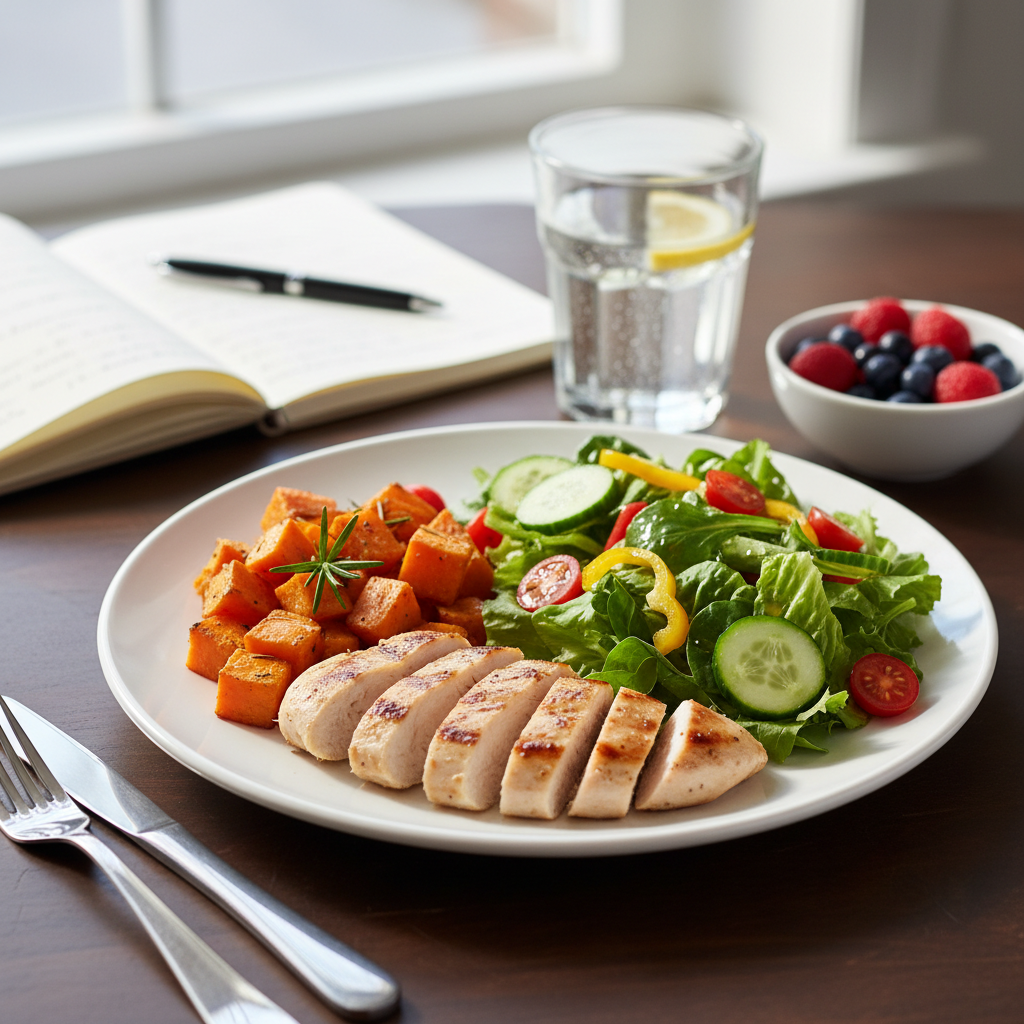
A practical sample day at 2,200 calories might include eggs and oatmeal at breakfast, a protein shake with fruit mid-morning, grilled chicken with rice and vegetables at lunch, Greek yogurt with almonds as an afternoon snack, and salmon with sweet potato and a salad at dinner. This kind of structure keeps protein high, provides carbohydrates around the most active parts of the day, and includes enough fat to support hormonal function.
Managing Macronutrient Ratios Throughout the Cut
Adjusting your macronutrient ratios over the course of a cut is normal and expected. Your body adapts to a consistent caloric intake over time, which can slow fat loss even when the deficit appears to be in place. Periodically shifting the balance between carbohydrates and fats, while keeping protein constant, can help push past these adaptations without requiring a further reduction in total calories.
One approach is to cycle carbohydrates across the week. On training days, carbohydrates are kept higher to support performance and recovery. On rest days, carbohydrates drop and fat intake increases slightly to maintain calorie balance. This approach keeps the overall weekly deficit intact while giving your body the fuel it needs on the days that matter most.
Protein should remain stable throughout the cut regardless of what adjustments you make to carbs and fats. Dropping protein to create more room for other macronutrients is a common mistake that leads to muscle loss. If your calorie target is making it difficult to hit your protein numbers, look at reducing fat slightly rather than cutting into protein.
Tracking your macronutrients with a food logging app makes this process much easier. Weighing food rather than estimating portion sizes leads to more accurate data and better results over time. Many people believe they are hitting their targets accurately when they are actually off by several hundred calories per day, which can completely undermine the deficit.
Pay attention to how your body responds over two to three week blocks. If body weight is dropping at roughly 0.5 to 1 pound per week and training performance is holding steady, your macronutrient targets are working. If you are losing weight faster than that, you may be losing muscle along with fat. If nothing is changing, your actual deficit may be smaller than you think.

Protecting Vitamin and Mineral Intake During a Cut
Reducing total food intake inevitably reduces the amount of vitamins and minerals your body receives each day. During a cycle, this matters more than it might during a standard diet because your body is under greater physiological demand. Deficiencies in key micronutrients can impair recovery, reduce training performance, and interfere with the hormonal processes that your cycle is designed to support.
B vitamins are critical for energy metabolism and should be prioritized through foods like leafy greens, eggs, and whole grains. Vitamin C supports immune function and tissue repair, both of which are relevant during a hard training block. Vitamin E acts as an antioxidant and helps protect cells from the oxidative stress that comes with intense exercise. Including a variety of colorful vegetables and fruits in your daily meals is the most reliable way to cover these bases.
Minerals deserve equal attention. Calcium supports bone density and muscle contraction. Magnesium is involved in over 300 enzymatic reactions in the body and is commonly depleted through sweat during training. Zinc plays a role in testosterone production and immune function. Iron is essential for oxygen transport and energy production. Foods like spinach, almonds, lentils, pumpkin seeds, and sardines provide meaningful amounts of these minerals.
A high-quality multivitamin can serve as a safety net during a cut, but it should not replace whole food sources of micronutrients. Supplements fill gaps; they do not replace the nutritional complexity that comes from eating a varied, whole-food diet. If your food choices are limited or repetitive during the cut, a multivitamin becomes more important.
Hydration is another factor that often gets overlooked during a cutting phase. Water supports nutrient transport, temperature regulation, and kidney function, all of which are relevant when the body is processing the compounds involved in a cycle. Aim for at least half your body weight in ounces of water per day, and increase that amount on training days or in hot conditions.
Timing Nutrition Around Your Training Schedule
Meal timing during a cutting diet is not as critical as total daily intake, but it does have a meaningful impact on training performance and recovery. Eating strategically around your workouts helps you get more out of each session and recover faster between them, which matters when calories are restricted and recovery capacity is reduced. A protein-rich meal or snack consumed 60 to 90 minutes be
Meal timing during a cutting diet
Eating strategically around your workouts helps you get more out of each session and recover faster between them, which matters when calories are restricted and recovery capacity is reduced.
A protein-rich meal or snack consumed
A small amount of fast-digesting carbohydrates at this time can also help sustain energy levels through the workout.
Post-workout nutrition is where many people
Consuming protein and carbohydrates within an hour after training helps replenish muscle glycogen and initiates the recovery process.
Spreading the rest of your daily
Eating every three to four hours prevents the sharp drops in blood sugar that can lead to cravings and poor food choices.
Avoid going to bed with a
A small protein-focused snack before sleep, such as cottage cheese or a casein protein shake, can support overnight muscle recovery without meaningfully impacting the caloric deficit.
Breaking Through Plateaus During a Cutting Cycle
Fat loss plateaus are a normal part of the cutting process. After several weeks in a deficit, the body adapts by reducing its metabolic rate, lowering non-exercise activity, and becoming more efficient at using available fuel. When progress stalls despite maintaining the same calorie intake and training volume, something needs to change. Diet breaks are one of the most effective tools for managin
Fat loss plateaus are a normal
After several weeks in a deficit, the body adapts by reducing its metabolic rate, lowering non-exercise activity, and becoming more efficient at using available fuel.
Diet breaks are one of the
A diet break involves bringing calories back up to maintenance level for one to two weeks before returning to the deficit.
Refeed days offer a similar benefit
On a refeed day, calories are increased above maintenance for a single day, with the extra calories coming primarily from carbohydrates.
The key with both diet breaks
These are not opportunities to eat without restraint.
If plateaus persist despite diet breaks
Adding variation to your workouts, increasing volume, or adjusting intensity can stimulate new adaptations and help restart fat loss.
A successful cut while on a
No single strategy works identically for every person, but the principles covered here provide a reliable framework to build from.