

What Canadian Shoppers Need to Know Before Buying Weight Loss Supplements
The Canadian market for weight loss supplements is enormous, and so is the amount of misleading information attached to it. Walk through any pharmacy, health food store, or online retailer and you will find hundreds of products making bold promises about fat burning, metabolism boosting, and rapid body transformation. Most of those claims are not supported by credible evidence, and some of the products behind them carry real health risks.
Health Canada regulates natural health products, which means any legitimate weight loss supplement sold in Canada should carry either a Natural Product Number (NPN) or a Drug Identification Number (DIN-HM) on its label. These numbers indicate that the product has been reviewed for safety and that its labeling meets national standards. What they do not confirm is that the product actually produces meaningful weight loss results. That distinction matters, and it is one the supplement industry rarely makes clear.
The absence of an NPN or DIN-HM on a product is a significant red flag. It means no independent regulatory review has taken place, and there is no assurance about ingredient accuracy, dosing consistency, or contamination risk. Products in this category are sold illegally in Canada, yet they continue to circulate through social media channels, unofficial online stores, and grey-market imports.
The word “natural” that appears on so many supplement labels carries no specific regulatory meaning in this context. Plenty of naturally derived ingredients can raise heart rate and blood pressure, stress the liver, or interfere with prescription medications. Bitter orange extract, high-dose green tea concentrates, and certain herbal stimulants all fall into this category. Understanding what an ingredient actually does in the body is more useful than relying on how it is marketed.
Ingredients in Weight Loss Supplements That Have Real Scientific Backing
Not every ingredient found in weight loss supplements deserves the same level of trust. A small number have been studied thoroughly enough to show consistent, if modest, effects when used at appropriate doses. Knowing which ones belong in this category helps cut through the marketing noise when evaluating products.
Caffeine is among the most researched compounds in weight management. It produces a modest increase in metabolic rate and can improve physical performance during exercise, which means more calories burned over time with consistent use. Research generally supports daily doses between 100 and 400 milligrams, though individual tolerance varies. People who already consume significant caffeine through coffee or tea, those with heart conditions, or anyone sensitive to stimulants should account for their total intake before adding a caffeine-containing supplement to their routine.
Green tea extract, when standardized for its EGCG content, has shown small but measurable effects on fat oxidation, particularly in people who exercise regularly. The effect is not dramatic, but it is consistent across multiple controlled studies. The important caveat is that very high doses of concentrated green tea extract have been associated with liver stress in some individuals. Choosing an NPN-licensed product at a clinically relevant dose reduces this risk considerably.
Fiber-based supplements including glucomannan and psyllium husk work through a straightforward mechanism. They absorb water in the digestive tract and create a sense of fullness that can reduce overall calorie intake throughout the day. These are among the better-tolerated options for appetite management and carry a lower risk profile than stimulant-based products. They require adequate water intake to function properly and to avoid digestive discomfort.
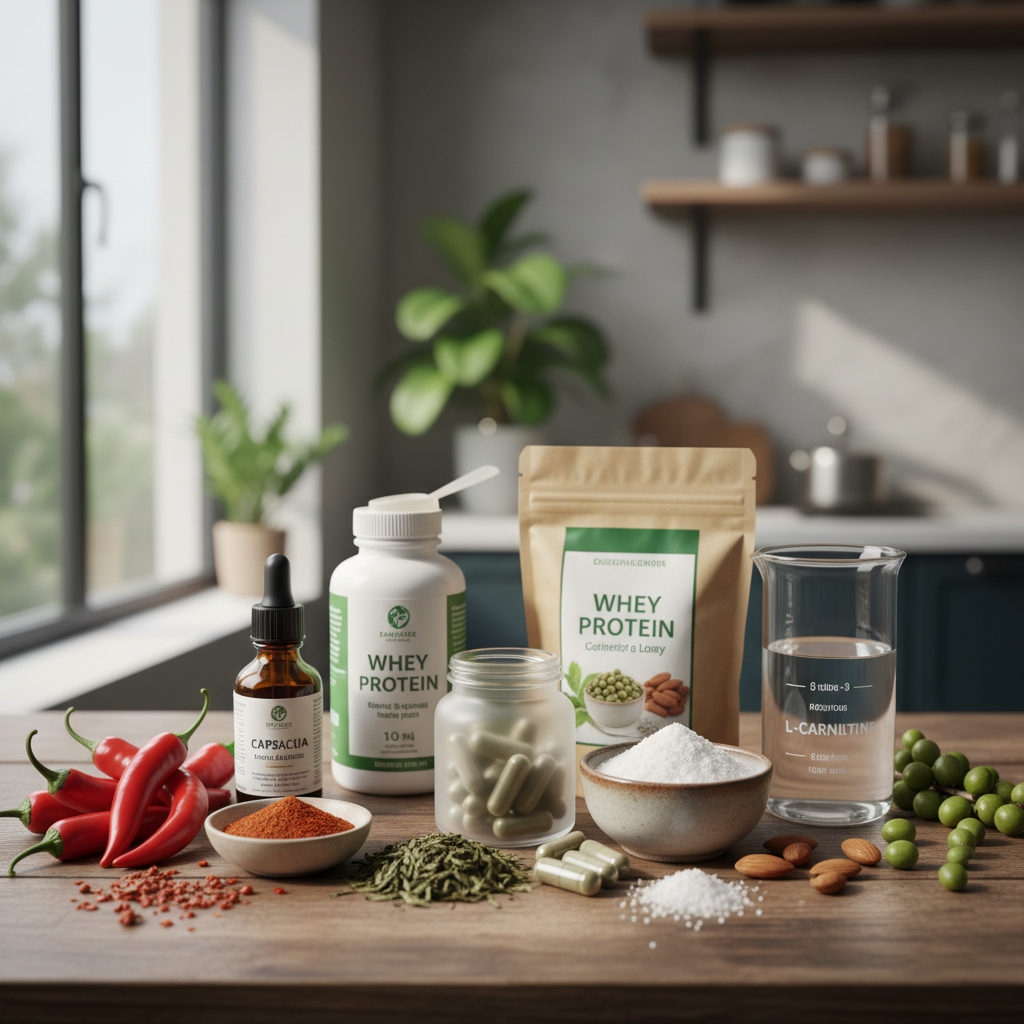
Protein supplements, whether whey, casein, or plant-based, support weight management by increasing satiety and helping preserve lean muscle mass during calorie restriction. Losing muscle alongside fat slows metabolism over time, which makes weight management harder as the process continues. Protein powders are a practical way to meet daily protein targets when whole food sources are not sufficient, though they are not inherently special beyond what the protein itself provides.
Berberine, chromium, and certain magnesium forms have shown some benefit in supporting blood sugar regulation. Stable blood sugar reduces energy crashes and the intense food cravings that often follow. These ingredients are not stimulants and tend to be well-tolerated, though berberine can interact with medications including metformin, making a review with a healthcare provider important before starting use.

How to Read Canadian Weight Loss Supplement Labels Without Being Misled
Reading a supplement label with any real understanding requires knowing what to look for and what to question. The first thing to check is whether the NPN or DIN-HM number appears clearly on the label. If it is missing, the product has not been reviewed by Health Canada, and that alone is a sufficient reason to move on.
The medicinal ingredients panel should list every active ingredient by its proper name, with the exact amount per serving shown in milligrams or grams. Vague terms like “metabolic support blend” or “fat burning complex” without specific amounts are a sign that the manufacturer is obscuring the formula behind a proprietary blend. Proprietary blends are not illegal, but they make it impossible to know whether the doses used are anywhere near what research has found to be effective.
The non-medicinal ingredients section lists fillers, binders, capsule materials, colorings, and flavorings. If you have known allergies or sensitivities, this section is worth reviewing carefully. It also gives a reasonable indication of how transparent the manufacturer is being. Companies that disclose their complete formulas, including inactive components, tend to be more trustworthy than those that keep everything vague.
Third-party testing certifications from organizations such as NSF International, Informed Choice, or USP Verified provide an additional layer of assurance. These certifications mean an independent laboratory has confirmed that what is listed on the label is actually present in the product, at the stated amounts, and that no prohibited or undisclosed substances were detected. For competitive athletes subject to drug testing, Informed Choice certification is particularly relevant.
Pay attention to how claims are worded on the label. Phrases like “supports healthy metabolism” or “helps reduce appetite when used with a calorie-reduced diet” reflect the kind of modest, qualified language that honest marketing uses. Promises of rapid fat loss, guaranteed transformations, or dramatic results without any mention of diet or exercise are not credible and often signal a product that is not worth the investment.
Weight Loss Supplements and Ingredients Canadians Should Avoid
Some categories of weight loss products carry enough risk that avoiding them entirely is the most sensible course of action. Products that promise dramatic results within days or weeks, without any lifestyle changes required, are the most obvious starting point. No over-the-counter supplement produces the kind of fat loss these claims describe, and when a product insists otherwise, the question worth asking is what it actually contains to produce such an effect.
Products marketed exclusively through aggressive social media advertising, unsolicited direct messages, or high-pressure sales tactics like countdown timers and artificial scarcity deserve serious skepticism. These distribution methods are commonly used for products that could not withstand the scrutiny of a regulated retail environment. Fabricated before-and-after photos, manufactured testimonials, and falsely attributed celebrity endorsements are standard features of these campaigns.
Any supplement that lacks a visible NPN or DIN-HM, imported products with labels written entirely in another language, and anything described as a “research compound” or labeled “not for human consumption” should not be purchased for weight management purposes. Health Canada has issued multiple advisories about products in these categories that were found to contain undisclosed stimulants, prescription-strength compounds, or outright banned substances.
Herbal fat burners containing undisclosed DMAA, high-dose synephrine, or compounds with amphetamine-like activity have been linked to serious cardiovascular events. These ingredients sometimes appear in products that look like straightforward herbal supplements from the outside. The only reliable way to know what a product actually contains is to choose manufacturers who provide third-party testing documentation and full ingredient transparency.
Any product that advises stopping prescription medications, discourages consultation with a doctor, or implies that medical supervision is unnecessary is sending a clear warning signal. Weight loss supplements are not replacements for medical care, and any company suggesting otherwise is not acting in your interest.
Working With Healthcare Professionals to Build a Supplement Plan
Before adding any weight loss supplement to your routine, a conversation with a qualified health professional is worth the time it takes. A family doctor, nurse practitioner, or registered dietitian can review your health history, current medications, and specific goals to identify which products are appropriate and which carry unnecessary risk for your particular situation. Bringing a complete list of everything you currently take, including vitamins, herbal products, and over-the-counter medications, makes that conversation more productive.
Certain health conditions change the risk profile of common supplement ingredients in meaningful ways. High blood pressure, liver conditions, thyroid disorders, diabetes, and pregnancy are among the situations that require careful review before adding stimulants, blood sugar-affecting compounds, or high-dose herbal extracts. What is low-risk for one person can be genuinely problematic for another, and a healthcare provider familiar with your history is best positioned to make that assessment.
Rather than starting multiple supplements at once, work with your provider to identify one or two priority areas. If appetite management is the main challenge, a fiber supplement is a logical starting point. If energy during exercise is the concern, a moderate caffeine source may be more relevant. A focused approach makes it easier to determine whether something is actually helping and reduces the risk of interactions or compounding side effects.
Set measurable criteria for evaluating whether a supplement is worth continuing. Body composition changes, waist circumference, energy levels, and relevant lab markers provide more useful information than scale weight alone. Schedule follow-up appointments to review progress and any side effects that have appeared. If a product produces no noticeable benefit after a reasonable trial period, that is useful information and a reason to reassess rather than simply add more products.
Keeping a written summary of your supplement plan, including what you are taking, why, at what dose, and for how long, keeps the process organized and ensures your healthcare providers have an accurate picture at every appointment. Supplements have a tendency to accumulate over time without clear purpose, and periodic review with a professional helps prevent that from happening.
Making Decisions About Weight Loss Supplements That Hold Up Over Time
Weight loss that lasts comes from consistent habits, not from any single product. Supplements can support that process, but the foundation has to be built on nutrition, physical activity, sleep, and stress management. Expecting a capsule or powder to compensate for gaps in those areas leads to frustration and wasted money, and no amount of marketing changes that reality.
The most reliable approach to evaluating any weight loss supplement is applying the same consistent criteria every time: regulatory approval through an NPN or DIN-HM, full ingredient transparency with specific amounts, dosing that aligns with what clinical research has studied, and third-party testing to confirm label accuracy. Products that meet all four criteria are worth considering. Products that fall short on any of them deserve a closer look before you commit.
Staying current with Health Canada advisories is a practical habit for anyone who uses supplements regularly. Health Canada publishes warnings about products found to contain undisclosed or prohibited ingredients, and these advisories are publicly available through their website. Checking the database before purchasing a new product takes only a few minutes and can prevent serious problems.
The supplement industry will continue producing new products with new names and new claims. Some will be backed by genuine research at appropriate doses. Most will not. Evaluating each one against consistent criteria keeps the decision-making process grounded regardless of how compelling the marketing looks. The goal is not to avoid supplements entirely but to use them selectively, at appropriate doses, with professional guidance, and as part of a broader approach to health rather than a substitute for one.